Community Empowerment Through Education on Ginger Compresses in Reducing Rheumatoid Arthritis Pain
DOI:
https://doi.org/10.70963/jikn.v2i1.1209Keywords:
Rheumatism, Ginger Compress, Elderly, Complementary TherapyAbstract
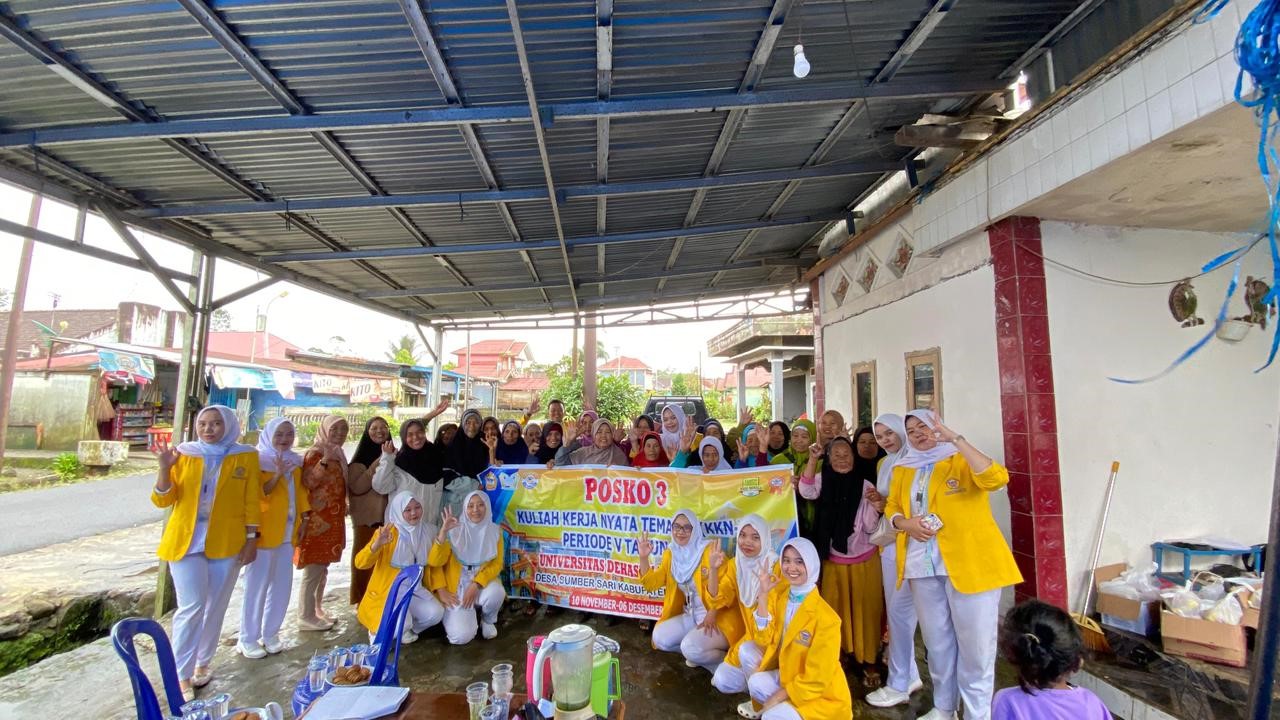
Rheumatism is a common health problem among the elderly, characterized by joint pain, stiffness, and limited mobility. This condition can disrupt daily activities and reduce quality of life. To increase public awareness of rheumatism management, a community service program (KKN-T) program, including a ginger compress, was conducted in Hamlet 3, Sumber Sari Village, as part of the Community Service Program (KKN-T) program at the Faculty of Health Sciences. Twenty-five participants, the majority of whom were elderly, attended the program. The training covered the definition of rheumatism, its signs and symptoms, causes, and the benefits of ginger compresses as a non-pharmacological therapy. Demonstrations on how to make and apply ginger compresses were conducted in person to ensure proper practice. The results of the program demonstrated an increase in participants' understanding of rheumatism and its management. Participants were also able to try ginger compresses directly and experience the benefits of the warm sensation that helps reduce joint tension and pain. Ginger compress therapy is considered easy, safe, and effective as a supportive measure in reducing rheumatic pain in the elderly.
Downloads
Published
How to Cite
Issue
Section
License
Copyright (c) 2026 Yosril Bahendra, Eka Tulhikma, Yosi Oktavia, Riza Umami, Aprilia Suryadi, Ice Febriantami, Murwati Murwati

This work is licensed under a Creative Commons Attribution-NonCommercial-ShareAlike 4.0 International License.